
Inside the research
An early signal is not the completed update
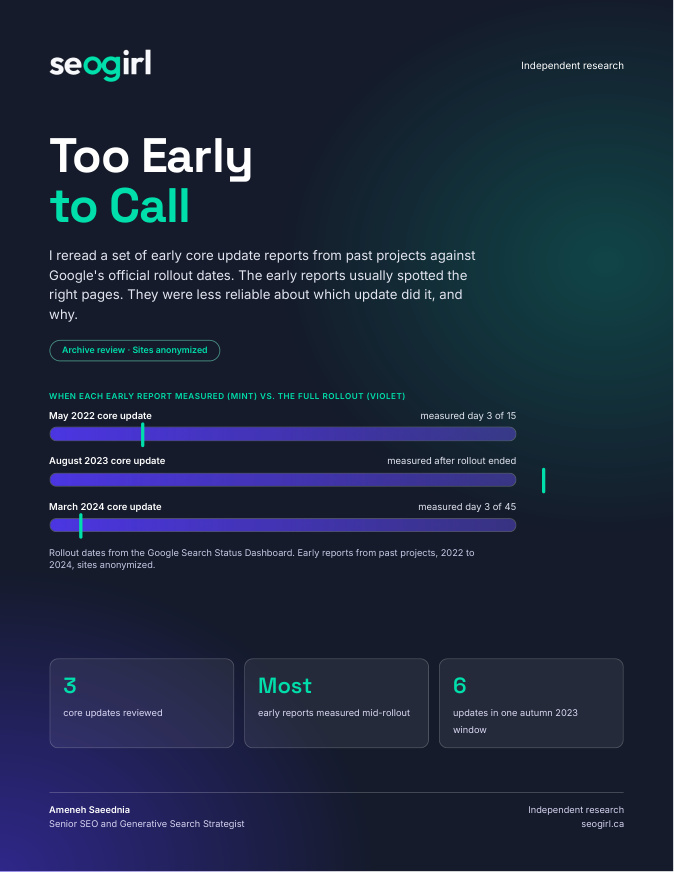
The revised review compares reports from past projects with Google’s public rollout dates for three core updates. Some reports measured only the first three days. That is useful for identifying pages to investigate, but it cannot represent the outcome of a rollout that later continued for weeks.
Name the measurement window accurately
A window labelled as a helpful-content-update period overlapped other changes. The autumn 2023 follow-up covered six updates, alongside possible seasonal and site changes. Naming one update does not establish that it caused every observed loss. The official dates are exact; site identities and site-level performance figures are withheld.
Different tools answer different questions
Rank-tracker keyword counts and visibility metrics can diverge because their samples and definitions differ. A single Good, Flat or Bad label can hide that uncertainty. Report the metric, sample, comparison period and disagreement before selecting a narrative.
The protocol I would use now
Label mid-rollout reports as early observations, log overlapping updates, compare equivalent periods and consider seasonality. Lead with available first-party page-group evidence, use third-party tools as context and schedule a later review. Keep “too early” and “mixed” as valid outcomes rather than forcing a causal conclusion.