
Tool behind the study
Follow-Up Query Studio
I upgraded Follow-Up Query Studio from a simulator to a Gemini workflow with Google Search grounding. For this study, it recorded reported searches, cited sources and suggested follow-ups turn by turn, including answers with no reported search.
Explore the toolLaunch appInside the research
A follow-up did not always trigger another search
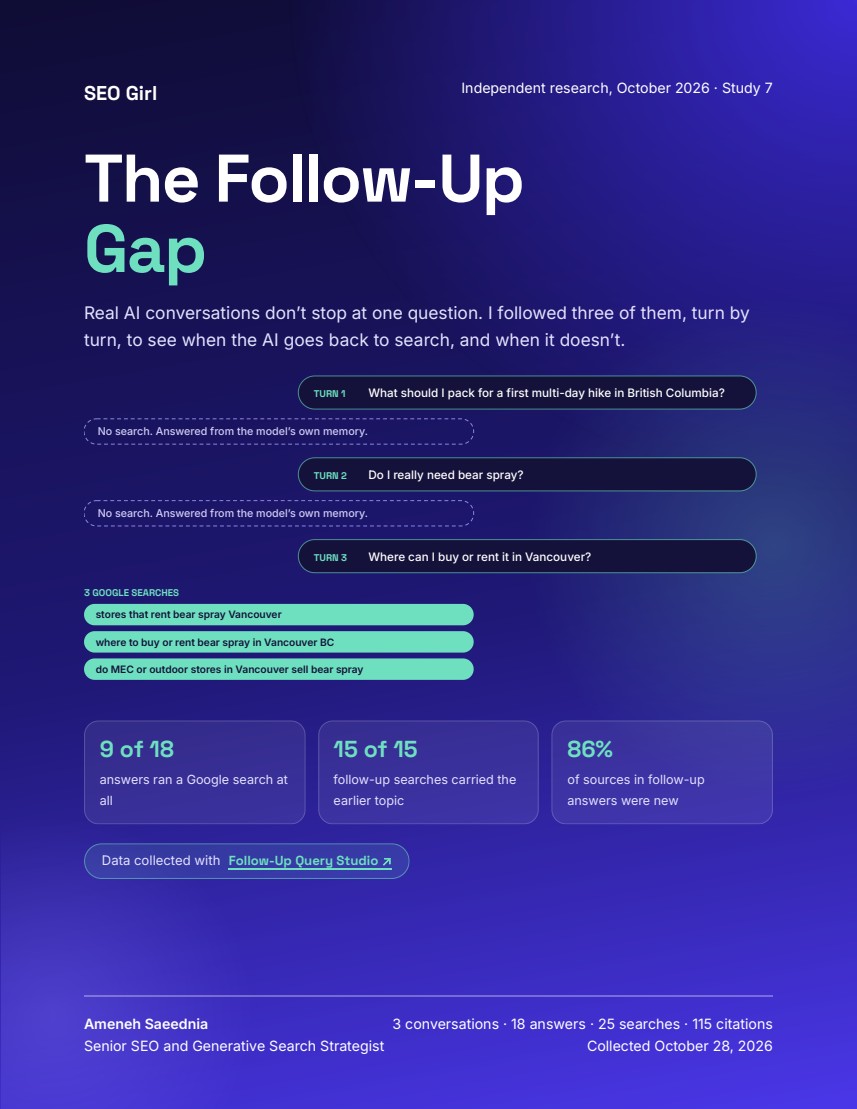
Nine of eighteen answers reported Google searches. Searching occurred on 4 of 6 opening questions, 3 of 6 first follow-ups and 2 of 6 second follow-ups. The other nine answers had no reported searches or citations. This is an observation of the available output, not direct access to the model’s internal reasoning.
Short follow-ups carried the earlier context
All 15 reported follow-up searches included the earlier topic. For example, a question about where to buy or rent “it” became a search for bear spray in Vancouver. This illustrates why a useful page should state the product, use and location clearly enough to stand on its own.
A first-turn citation did not secure later visibility
The report found that 86% of sites cited in searched follow-up answers were new to that conversation run. Suggested next questions repeatedly included product care and bear safety. These suggestions are model predictions, not observed user behaviour; they offer hypotheses for content planning that still need testing.